Exhibit JT-0412 · Level 4
Steam Engine
Share via
Heat becomes motion — the engine of industrialisation.
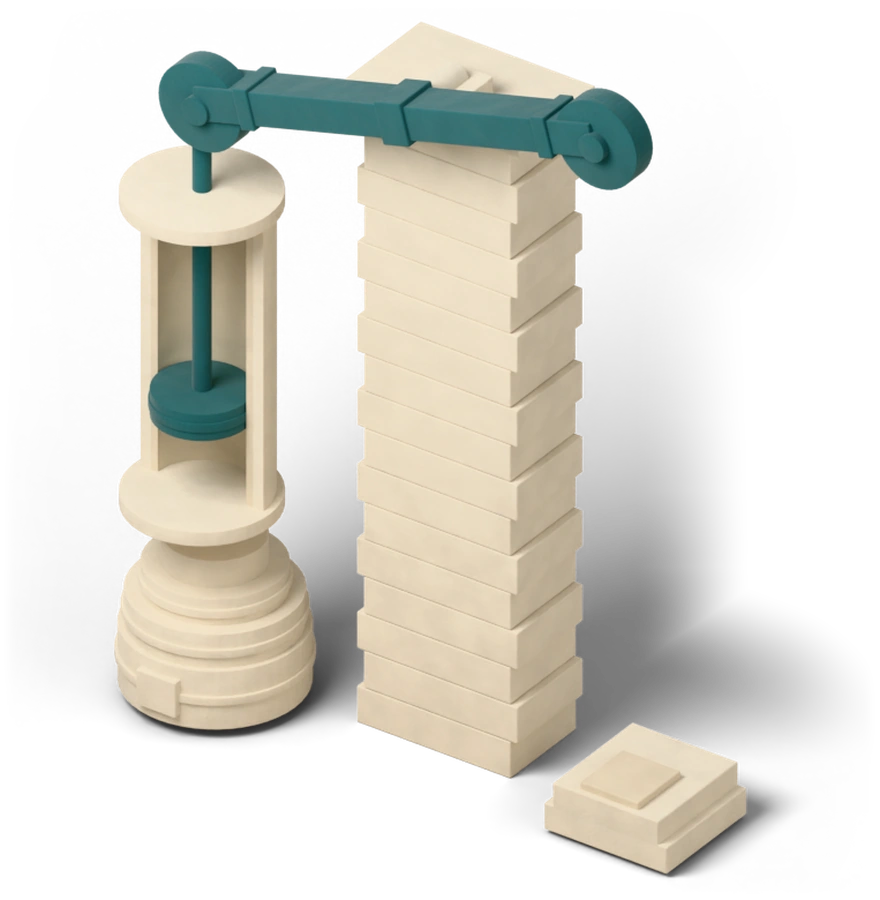
Thomas Newcomen built the first practical piston steam engines in England from 1712 onwards. They were used mainly to pump water out of mines. Steam entered a cylinder and was cooled by a jet of water. As it condensed, the pressure of the outside air pushed the piston down. Because the cylinder cooled down on every stroke and had to be heated up again, these engines burned a lot of coal.
James Watt moved the cooling into a separate condenser that stayed cold all the time, and was granted a patent for it on 5 January 1769. Engines with this condenser needed only about a quarter to a third of the coal a Newcomen engine used. A gear mechanism patented in Watt's name in 1781 turned the piston's up-and-down movement into rotation. With further improvements, steam engines could now drive factories too.
The first Watt-type steam engine in Germany started work near Hettstedt on 23 August 1785. It pumped water from a copper shale mine and was built by Carl Friedrich Bückling.
In 1862 Rudolf Wolf founded an engineering works in Buckau, now part of Magdeburg. It mainly built portable steam engines, known in German as Lokomobile, in which the boiler and the engine were firmly joined together. In agriculture, portable engines were used to drive threshing machines, among other things. Wolf's first portable engine from 1862 is now in the collection of the Deutsches Museum in Munich.
Listen
Listen to that hiss. Hot steam becomes movement — and movement becomes a whole new world of factories and trains.
Topics
IndustrialisierungEnergieinteractive
Ask the museum
Did you notice something? Do you have a question about this exhibit? Write it here — the museum reads along.